HOPE GROWS WHERE GOALS ARE PLANTED

My first encounter with goal setting came from attending a camp in the summer before I entered seventh grade.
Our entire day was strictly regimented.
Meals, learning stations, and, unlike many programming choices today, there were no planned ‘getting to know you’ activities.
Many growth opportunities came from this type of structure.
Our work days were sometimes ten hours long.
This setup was perfect for a shy girl who wasn’t afraid of elbow grease.
I preferred longer time blocks for tackling projects back then as I do now.
The expectation was that each of us would learn.
We did.
Goals were set, actions taken, hope grew, and we learned.
We also formed friendships of utility along the way.
Our social discourse went something like this, “When did they say we needed to be at the dining hall? Where is it?”
If we made an error, corrective disciplinary actions were invoked.
Not only that, but afterwards we needed to immediately say, “Thank you for caring enough to discipline me.”
Can you guess what happened to people who didn’t say ‘thank you’ afterwards?
They received extra practice getting the sequence right.
| Mistake = Corrective actions = Opportunities to say, “Thank you.” |
Yes, despite all the perspiration, I loved that darn boot camp.
It wasn’t what I anticipated, but it was just what I needed.
Explicit guidance. Targeted encouragement.
The ratio of positive statements to criticism was easily 7:1, meaning seven great things to inspire hope, and one delicately phrased specific critique for future consideration.
You could say the camp was created for awkward, hormonal teens learning to channel their high energy into productive pursuits.
The number one reason this camp became a cherished tradition was structure.
Its structure can also bring your story to the fullest expression.
If you get an opportunity, research Project Gutenberg, an online library that includes older stories.
Read these specifically to look for the structure.
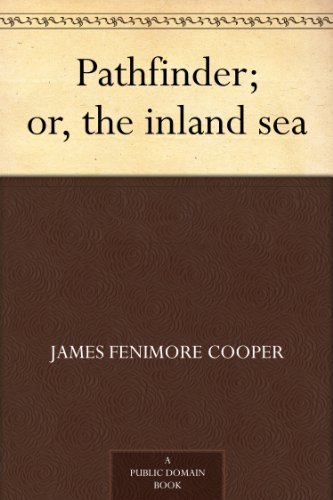
One of the tales I found on Project Gutenberg, written in 1840, is James Fenimore Cooper’s The Pathfinder or The Inland Sea.
It takes place in 1759 and involves historical points of interest woven throughout the story arc, set in Lake Ontario and the British Fort of Oswego.
We are taught that the three-act structure has origins from Aristotle (4th century BCE, 335 BCE).
Each story has a beginning, middle, and end.
Act I = Setting and inciting incident.
We get to know the protagonist and identify with her plight.
Something is keeping her from reaching her goal.
Act II = Tension, subplots, and we get to see how the protagonist makes strides for personal growth.
Act III = Rising tension and culminating endings.
I discovered The Pathfinder or The Inward Sea on Project Gutenberg and confirmed the structure is one we can study and learn from today.
Structure isn’t a limiting practice, but a way to potentially expand your story in ways that evoke stronger emotions for your readers.
One goal I keep in mind as a writer is to be mindful of story structure.
If we learn about basic and advanced story structures, we can create the type of entertainment that elevates the human experience.
We all want our stories remembered for the right reasons, and structure can help us reach that goal.
EXPLORE MORE:
Other stories by James Fenimore Cooper:
Wyandotte, or The Hutted Knoll: A Tale (published 1843)
The Spy: A Tale of Neutral Ground (published 1821)
The Prairie: A Tale (published 1827)
The Pioneers, or The Sources of the Susquehanna (published 1823)
The Last of the Mohicans: A Narrative of 1757 (published 1826)
The Deerslayer (published 1841)