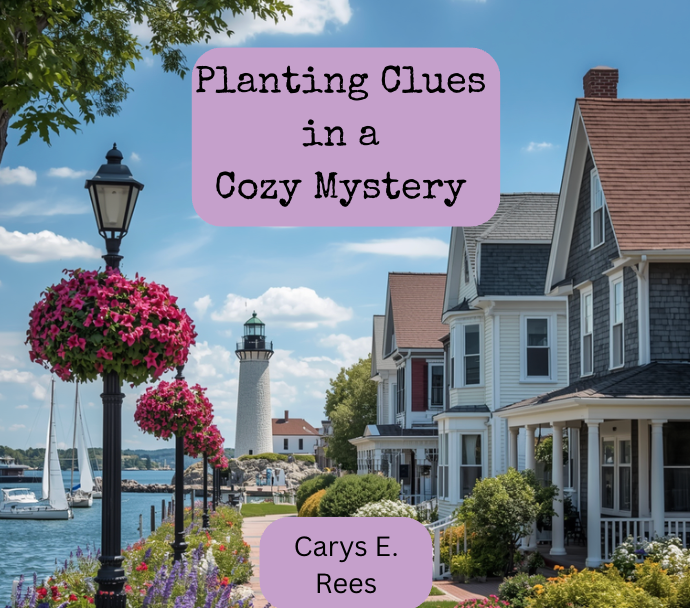
The beauty within cozy mystery settings is apparent on both the surface level and in subtext.
These communities can be calm, at least until chaos strikes. A reader does not see crimes happen, but scuttlebutts and shenanigans do exist in cozy mysteries.
This is when our dear reader can be an active participant by looking for clues.
A careful cozy mystery reader will be sure to look back through the story to make sure the clues match up with the story’s resolution.
Conflict creates plot → Plot creates pacing → Pacing creates reader engagement
CREATE IMMERSIVE EXPERIENCES BY PLANTING CLUES:
- Be true to the clues. Do your clues point to an ending that makes sense? Be logical, yet obscure the truth until the big reveal. That’s not to say story twists should be avoided. Keep the story twist, but remove twisted logic.
- Have your clues come in patterns. You might have your antagonist always go to the farmer’s market only on the second Tuesday of each month, unless they’ve visited the animal shelter the day before. If they’ve come from the shelter, have them do X, Y, and Z.
- Place clues in obvious locations. Be bold about what clue you’ve planted, but blasé about reactions to it. Example: “Oh, that’s just Janel’s water siphon project. She’s always doing something crazy, and besides, none of her ideas ever work.”
- Place clues early. You can create ‘Ah, ha!’ moments for readers if you’ve established the overlooked truth right away. The reader is shocked. Have someone trustworthy state a lie right away, and have others automatically believe it.
- Plant red herrings, otherwise known as fake clues. Maybe the missing first edition was only shelved in the wrong spot? That means Lucy didn’t steal it when everyone went to lunch. She really did have her own first edition stored safely at home in her hope chest.
Have a happy writing week. Plant clues like flowers and watch your story’s plot bloom.




I cannot see what I am typing?? Seems to be something wrong with the comment section.
However, cool cover page:)