It’s always great to learn new things when on a road trip.
I’ve enjoyed going through mazes, and I suspect you have, too.
Many people use the term interchangeably.
| Pretest: A maze and labyrinth are the same thing. True or False |
One of the highest rated corn mazes in Minnesota is hosted each
autumn by Paul Bunyan Land.
It’s tremendously popular for families, teens, and date night for couples.
It’s easy to recognize all the creative effort they put into making this maze a
worthwhile use of time.
I highly recommend visiting Paul in both the summer and autumn months.
Families brought their younger children through the maze during daylight hours.
Older kids and adults tend to visit the maze in groups.
I said ‘yes’ to helping chauffeur a group of teens who signed up
to go through the corn maze.
My job was to drop them off and pick them up by a certain time.
Teens going through a corn maze without parent supervision is like an initiation
ritual to earn ‘big kid’ status.
Teens who can make this trek in the dark, along with all the ‘surprise elements’
embedded within the maze and around blind corners, feel pride in their accomplishment.
It’s challenging.
Terrifying.
Bewildering.
The teens I chauffeured preferred going through the corn maze in the dark.
I planned to promote the corn maze, not go through it.
“You can go through by yourself. It’s easy,” they said. “No one really gets lost inside a maze.”
I did go through.
Alone.
I would’ve been sitting inside the car waiting for them to come out otherwise.
Let me state something for the record.
If I had known how long it would take me to get through the corn maze at night, I would
have brought snacks.
Getting lost inside a maze provides much time for contemplation.
For example, did you know that a maze and a labyrinth are not the same thing?
I believe I learned that a long while back, but being lost inside a maze brought that
fact to my memory.
In a maze, it is possible to get lost.
In a labyrinth, the path only goes one way.
You are either going into a labyrinth or coming back out of a labyrinth.
Here’s what else I know about labyrinths:
Labyrinths are often thought of as a method of meditation.
Ancient people groups attributed wish fulfillment with going into a maze.
People throughout the ages have made pilgrimages to labyrinths.
Labyrinths are located throughout the globe.
Chartres Labyrinth is the largest labyrinth in Europe’s Christendom, inlaid in the
floor of Chartres Cathedral in France, built around 1200.
Some believe that the center of this labyrinth held a tomb for the masons, but there is
currently no archeological evidence to support this belief.
The Solovetsky Islands have Neolithic labyrinths 3,000 years old.

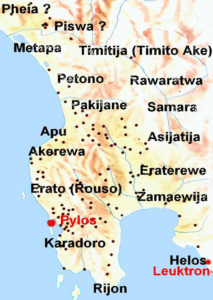
An ancient labyrinth at Pylos, Greece is dated to be approximately 2,800 years old.
Greek clay tablets dated 2,000 years ago in Gedimedu, India.
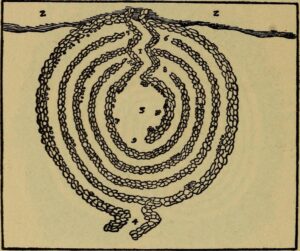
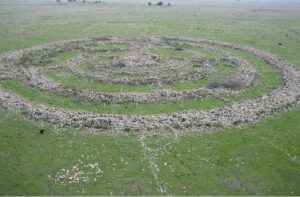
Jericho Labyrinth 822 AD is shown as a square and circle on early manuscripts.
Arizona’s Casa Grande ruins. 1694. An interesting consideration for this labyrinth is that it’s almost a twin to 2,000-year-old coin from Crete.

Stevens: Stone Age labyrinth dated to Neolithic period.
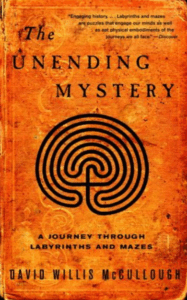
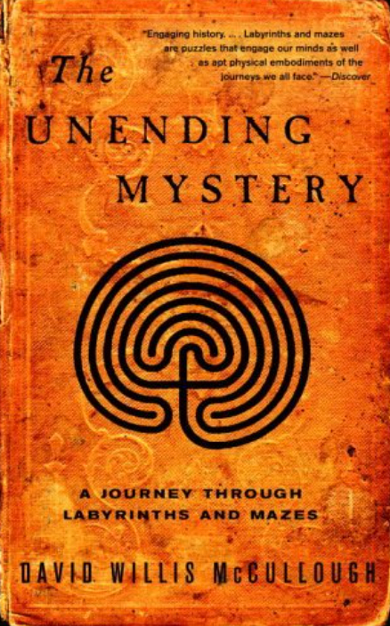
I am fascinated with the concept
behind David W. McCullough’s The Unending Mystery: A Journey Through Labyrinths and Mazes (Pantheon, 2004).
No mystery, this book uncovers many mysteries of the interesting points of labyrinths and mazes.